Cultural evolution of group identity
How does information about our social group change as it passes from person to person — like in a game of Chinese Whispers? And does it get subtly distorted to make our own group look better? We ran a chain-transmission experiment to find out.
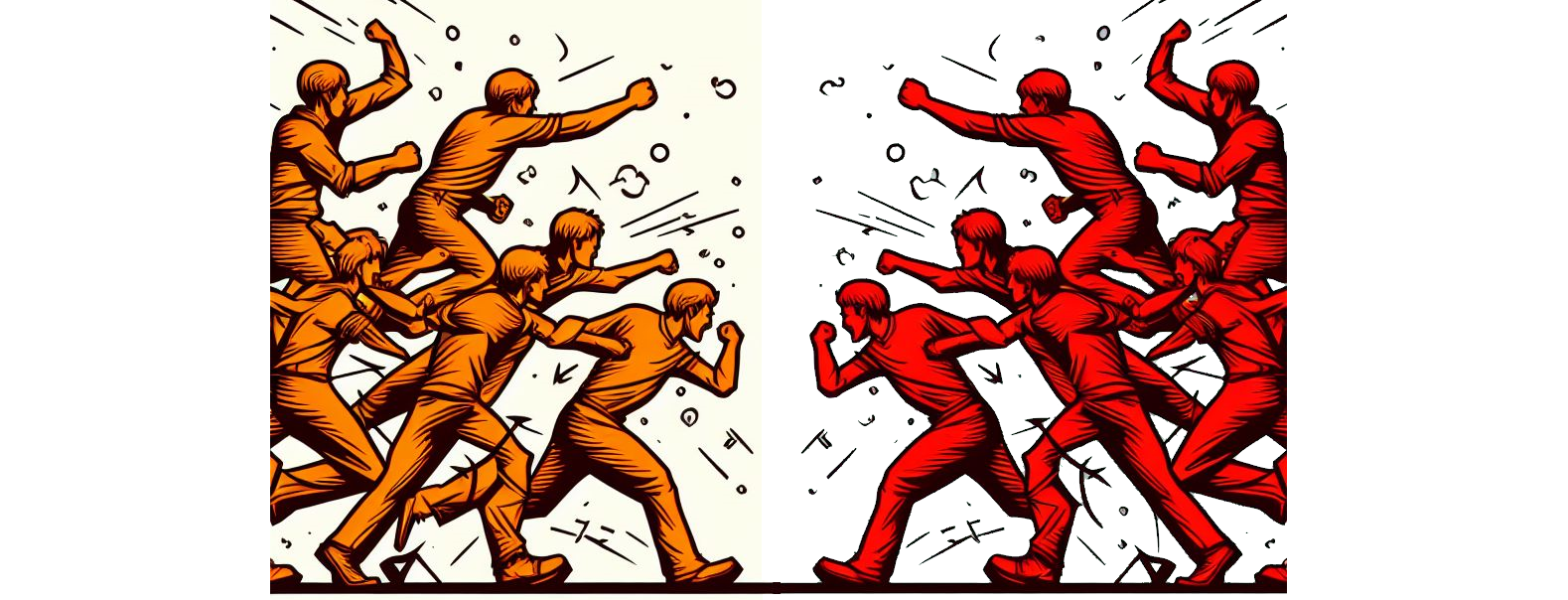
We assigned participants to minimal groups — telling them they belonged to either the "Green" or the "Blue" village. Then we showed them statistics about how often certain traits (positive, neutral, or negative) appear in each village. For example: "40% of people in your village are friendly, and 55% in the other village are friendly." Their job was to pass this information on to the next person by marking each number on a scale.
As information traveled through the chain, it didn't stay neutral. People systematically distorted the numbers in ways that subtly favored their own group — even though the groups were entirely artificial and had existed for only minutes. Even with no real history, no real stakes, and no real differences between the groups, the pull of in-group favoritism was strong enough to bend the facts.
You can explore our results interactively in the dashboard below — see the biases for yourself.
Woźniak, M., Charbonneau, M., Knoblich, G. (2026). "Biases in cultural transmission of information about a minimal ingroup". Scientific Reports.
The project was run in collaboration with Mathieu Charbonneau and Guenther Knoblich.